Step one
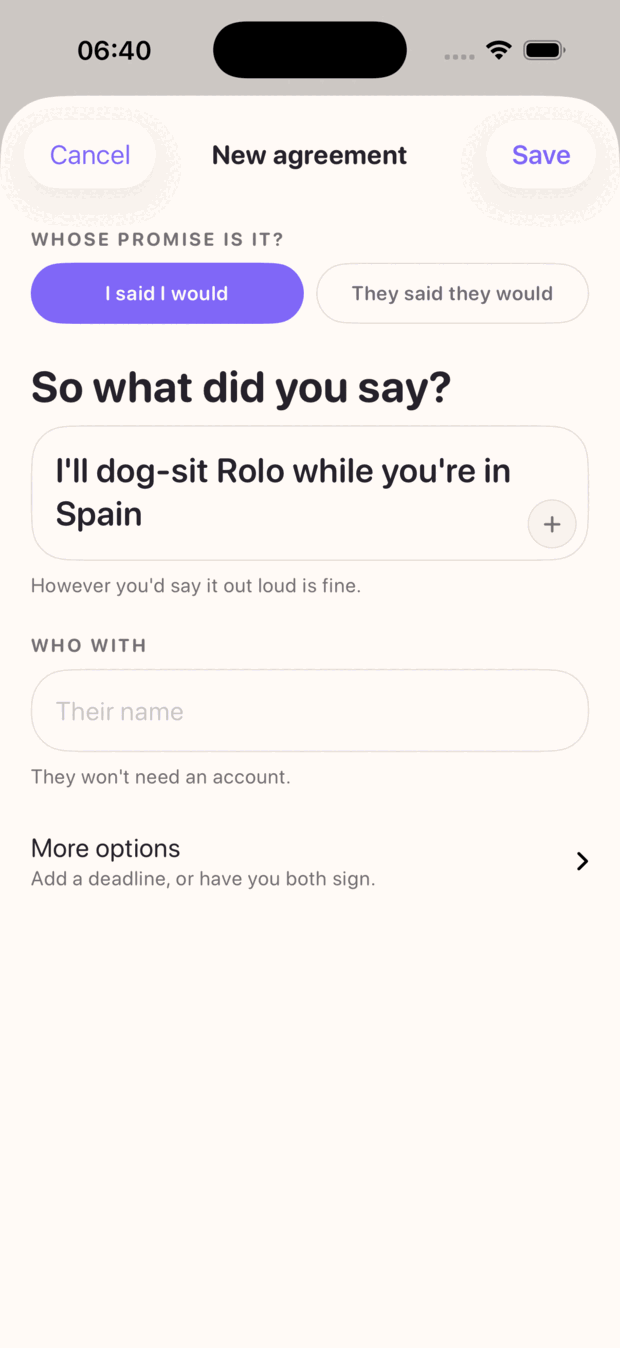
Write it the way you said it.
Not a task. Not a reminder. The sentence you would use out loud, with the other person’s name on it: Sarah and I agreed I would pick Jack up on Tuesday.
Add a deadline if it has one. Add an emoji if you want to find it again quickly. Neither is required, and the agreement is the only part that matters.
Step two
Send a link. They need nothing.
The person you send it to does not install the app, does not make an account and does not hand over an email address. They tap the link and a page opens that looks like the app, with your agreement on it.
This is deliberate. An app both people have to install before anything can be settled is an app that settles nothing.
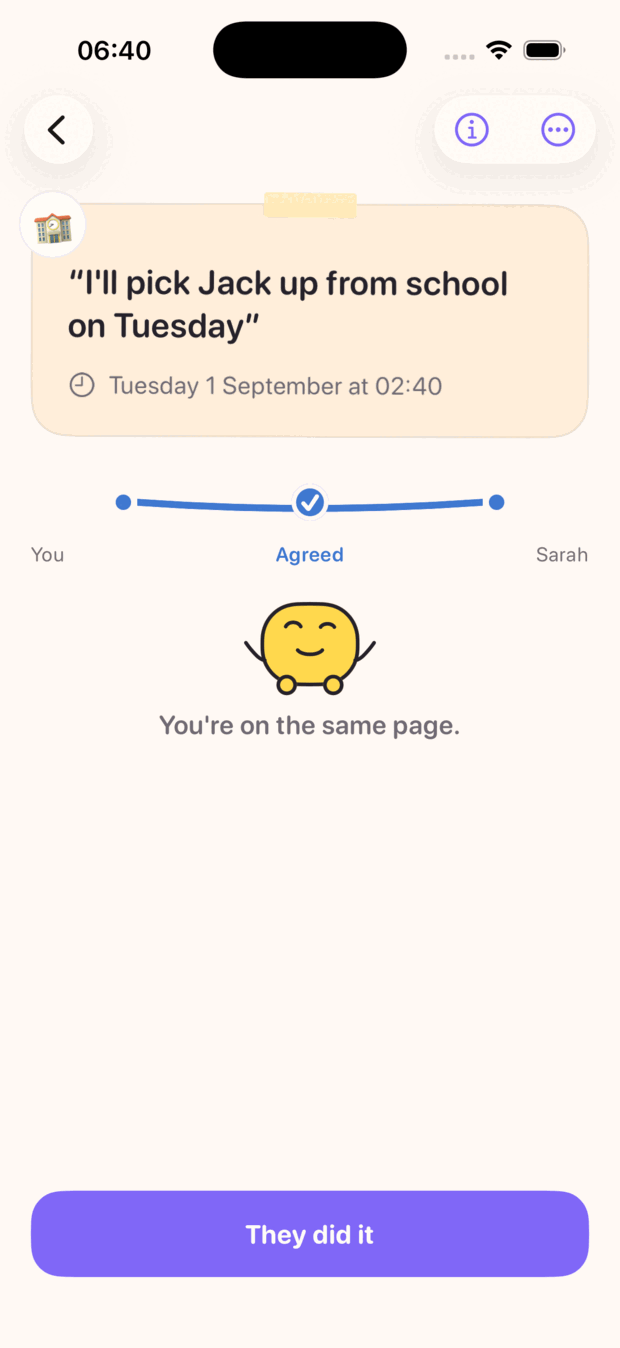
“I’ll pick Jack up from school on Tuesday”
No account, no app, nothing to sign up for.
Step three
Three answers, because two is not enough.
Yes, that is right. The line closes and you both hold the same sentence.
That is not how I remember it. They write their version. Both stay on the record, and you choose which stands.
I never agreed to this. The rarest answer and the one most apps leave out. Without it, somebody who was never party to an agreement can only dispute the wording of a thing they never said.
Afterwards
Reminders, and one question at the end.
A nudge the day before, a few hours before, and when it falls due. Then, a few hours later, the only question that closes an agreement: did it actually happen?
Nothing is ever marked done on your behalf. An app that quietly ticks things off is an app whose record you cannot trust, and the record is the entire product.
Every exact time is kept, to the minute. If somebody insists they never saw it, the timeline says when it was written, when it was sent and when it was answered.
Write one down and see.
The first five are free, and the other person never pays at all.